Disruptions to Watch Out for

Businesses are exploring the next competitive advantage beyond digital transformation.

Global research and advisory firm Gartner Vice President and Fellow David Furlonger, who recently visited Manila in May, offered a strategic look at how enterprises are evolving by becoming autonomous businesses, where machines act independently to create and exchange value.
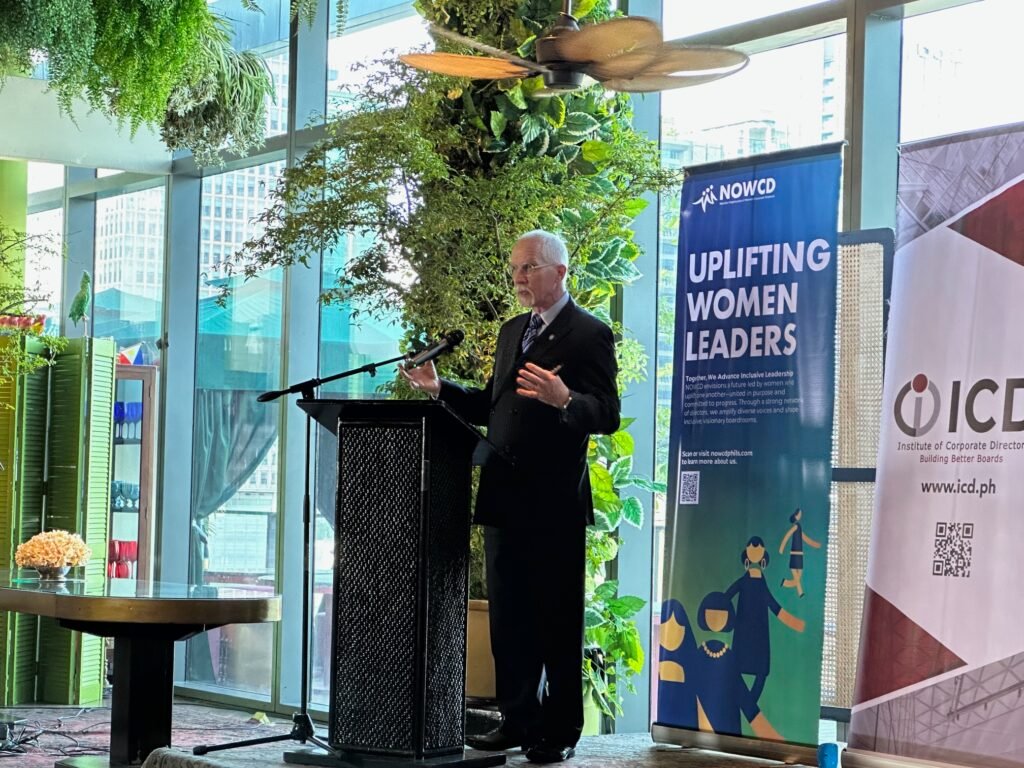

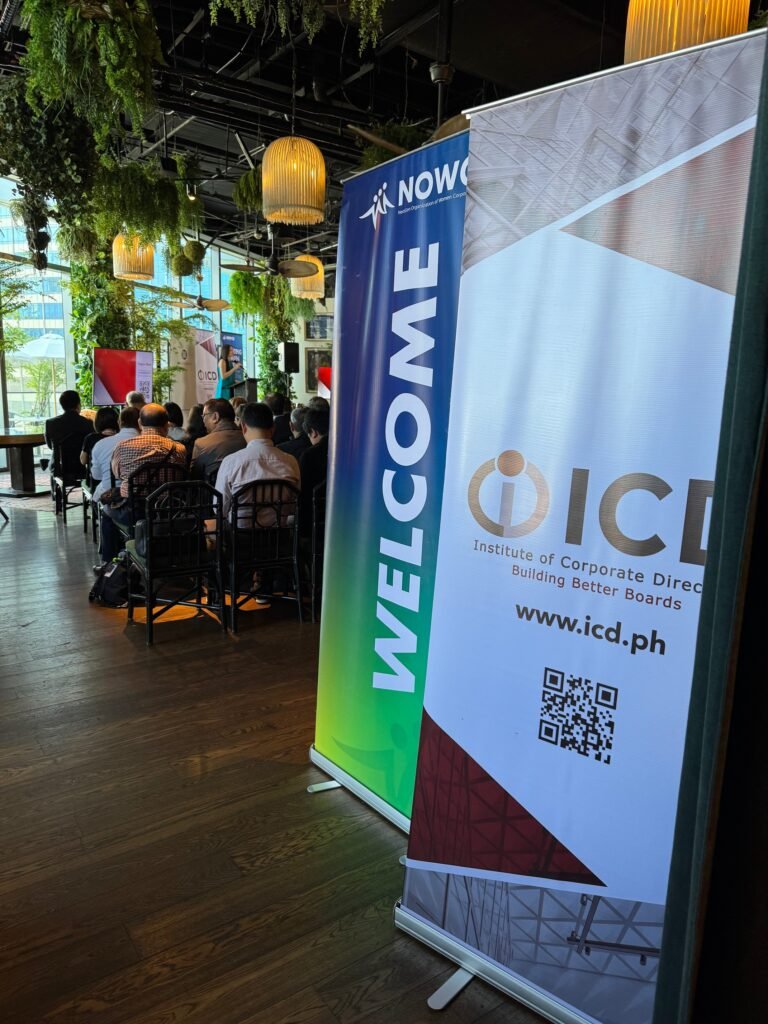
Gartner conducted sessions with SM Investments Corporation, the parent firm of the SM group, and the Institute of Corporate Directors (ICD) in partnership with the Nextgen Organization of Women Corporate Directors (NOWCD).  Gartner noted a shift in the mindset of leaders who are no longer simply optimizing, but seeking ways to continuously evolve.

​Some of the insights from these sessions are:

Disruptions you might not see coming in 2024 to 2029
Mr. Furlonger identified disruptions businesses are contending with today. These are Personalized Cinematic Experiences, Search Engine Optimization, Guardian Agents, Autonomous Drones, Software Defined Semiconductors, Gen AI Avatars, Energy Power Play and Water Scarcity.

He said there is a significant shift over the last 25 years where combinations of disruptions are joining together to make the complexity of the disruption much greater and their impacts and outcomes much harder to deal with.

AI as the Central Catalyst
Gartner further said that artificial Intelligence has emerged as the most disruptive force over the next three years, cited by 77% of CEOs far outpacing other emerging technologies. Yet only 29% believe their businesses are structurally prepared for an AI-first world. This signals a major transformation gap.


AI is not just another tool in the tech stack, it is shaping how businesses make decisions, operate, and engage with both human and machine customers. But its real value depends on whether the organization can change its operating model to match the pace and capabilities AI enables.

Building Dynamic Capacity
Mr. Furlonger introduced the concept of dynamic capacity, the ability for organizations to flex, scale, and pivot in response to change. This includes increasing or decreasing production, rebalancing workforces, reengineering supply chains, and acquiring or divesting assets all in real time.

This means designing businesses where human and machine collaboration is foundational, allowing companies to thrive in unpredictable markets.

From Digital to Autonomous Business
He also highlighted a clear evolution of business maturity: from analog to e-business, to digital, and now toward autonomous business. This new model is defined by systems that can learn, act, adapt, and even transact independently.


Autonomous businesses will rely on four integrated pillars: autonomous operations, self-adjusting products, augmented leadership, and the emergence of machine customers. Together, these elements form a programmable economy where decisions are decentralized and made by intelligent agents.

Challenge: What’s the Real Change?
Mr. Furlonger posed a critical question: AI is the tool—what’s the business change? He said that technology adoption alone is insufficient. What’s required is a reinvention of business itself that includes its structures, processes, and mindset. Organizations that stop at digital transformation will soon be overtaken. The next frontier demands intentional design for autonomy, adaptability, and AI-native.

How do women leaders drive business success? | Thought Leaders

Atty. Euney Mata-Perez explains how career women can build themselves up for a post-
CEO stint in corporate boards. She herself took the Professional Directorship Program
(PDP) and various seminars and workshops even as a junior lawyer partner some
twenty years ago. “I knew back then I already wanted to be a corporate director,” she
shares with BUSINESS OUTLOOK hosts Salve Duplito and Ron Cruz. Today, her
preparations are paying off as she sits in several publicly-listed companies as an
Independent Director.
She also encourages companies to ensure their boards are diverse not only in gender
and age but in competencies. Watch Atty Euney as she promotes how organizations
like NOWCD can also provide mentoring to budding directors as well as providing a
pool of directors for forward-thinking companies to choose from. “They keep giving the
excuse ‘we don’t know any women directors’ so here we are at NOWCD,” she
enthuses.

THOUGHT LEADERS episode

In a recent episode of THOUGHT LEADERS , a show hosted by Cathy Yap Yang, Atty.
Euney Mata-Perez shares about her inspiration from a woman Chair, the late and
former Senator Helena Benitez who saw chairing a board meeting , when Perez was
still a Girl Scout. Then to her years as a junior partner in a law firm, she shares her plan
to be a director someday. That day has come. Atty/ Euney now sits in several boards,
including a publicly-listed company as well as NGOs.
She talks about how networking and joining groups like NOWCD can help someone in a
career move towards the B-suite.

Women are shattering the glass ceiling of corporate boards, yet chairmanships remain elusive

Nearly 90 percent of the largest European listed companies are already compliant with the European Gender Balance Directive of at least 33 percent of women on Boards of Directors. However, only one in ten chair positions are held by women while women, at the same time, are making inroads as chairs of audit committees.

Surprisingly, women are more present at the helm of audit committees, which are extremely technical, time-consuming, and highly challenging positions, while there are still so few of them chairing the boards; Even if more women are CFOs than CEOs, it doesn’t explain why so few women are presiding over Boards of Directors”, expressed Rytis Ambrazevičius, the chair of ecoDa.

The 2024 ecoDa barometer, developed in partnership with Ethics & Boards, shows an improvement of the representation of women on Boards of Directors throughout the EU. This year an average of 40,2 percent of board directors in Stoxx Europe 600 companies are women. Only Luxembourg and Poland are lagging behind.

The evolution of the presence of women in executive positions is progressing in Europe as a positive result of feminization of boards, but is clearly accelerated by national legislation”, added Floriane de Saint Pierre, founder and Chair of Ethics & Boards.

While the Stoxx 600 companies are inclined to entrust women with the presidency of committees, they leave the chairmanship of the Board of Directors to men. Only 10,4 percent of corporate chairs were held by women in 2024, down from 11,2 percent in 2023. Six Member States (plus Switzerland) do not even reach 10 percent of female chairs.

The trend of women chairing audit committees is evident across Europe. In 13 countries, over 40 percent of chairs of audit committees are women. At the same time, only five countries reach 40 percent women as chairs of nomination committees.

Gender diversity in executive leadership also continues to improve from year to year although at slightly lower proportions compared to board representation (+0.9 points for women in executive leadership versus +1.3 points for women on board).

Read the full press release here.
Reprinted from Philippine Star on April 10, 2024