Fourteen women corporate leaders are driving change and inspiring future generations. These Filipina CEOs share their career journeys, challenges and the legacy they aim to leave
Across industries ranging from technology and banking to retail, infrastructure and consumer goods, these 14 Filipina CEOs are redefining what leadership looks like in the Philippines. Their journeys are shaped by resilience, ambition, continuous learning and a commitment to uplifting others along the way.
From overcoming gender stereotypes and navigating career pivots to building businesses, mentoring future leaders and championing Filipino talent on the global stage, each woman brings a unique perspective on success and purpose. Together, the members of the Filipina CEO Circle share the experiences, challenges and leadership lessons that continue to inspire a new generation of women to aim higher, lead boldly and create lasting impact beyond the boardroom.
Ireen Catane (Country President, Schneider Electric Philippines)
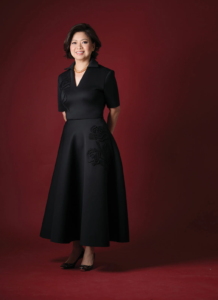
“Focus on your skills and never stop learning; this will set you apart in the future,” says Ireen Catane, whose career has been shaped by preparation, curiosity and grit.
Part of the early batches of graduates of the computer science programme with a specialisation in computer technology at De La Salle University, Catane stood out in her first job as a systems engineer with a Japanese company. “I was quite fortunate because my degree was very rare at the time,” she confirms.
With an inquisitive mind and unwavering determination, she joined the 190-year-old French company Schneider Electric four years ago. “It’s a global energy technology leader with a three-decade presence here in the Philippines, and one of the largest employers of electrical and mechanical engineers,” Catane describes.
Married with five children, she shares that strong support systems both at work and at home helped her in her journey: “I had a boss who later became my mentor; his guidance played a defining role in my development as a leader.” Growing up in a family of four boys and two girls in hardware retail, she adds, “I never thought females should be treated differently.”
To younger women aspiring for success, Catane advises: “Attitude and aptitude also matter; but in a very competitive workplace, it is usually what you know that will see you through a board meeting. For this, you must prepare a lot and study ahead so that when you make a recommendation, it’ll be based on solid facts and not just on what you think.”
Arlene Tan-Bantoto (President & General Manager, Wyeth Philippines)
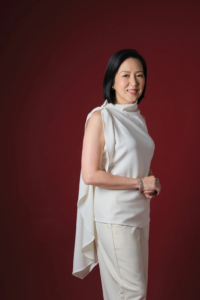
Joining Nestlé Philippines as a sales and marketing trainee, Arlene Tan-Bantoto never imagined she would one day lead Wyeth Philippines. Becoming a manager already seemed like a dream. But at Nestlé, she built a 32-year career defined by steady growth, success, curiosity and a genuine love for people development. In 2022, when Wyeth and Nestlé Infant Nutrition were integrated, the cum laude Business Economics graduate of UP was appointed president and general manager of Wyeth Philippines. She also continued as business executive officer of Nestlé Philippines’ Nutrition and Health Business Unit.
A defining moment came in 2015, when Tan-Bantoto joined Nestlé’s pioneer batch of internal coaches. The experience transformed her approach to leadership. “Coaching is about being genuinely interested with your teammates, asking questions and becoming a thinking partner, instead of simply giving solutions.”
Today, she is clear about the legacy she hopes to leave behind: developing leaders, nurturing people and building strong succession for the future. Her passion for mentoring led her to the Filipina CEO Circle, whose mission reflects her own values.
Beyond the corporate world, Tan-Bantoto hopes to continue giving back through nonprofit work, particularly with an organisation she helped establish for persons with disabilities—an advocacy inspired by her daughter Nina, an international artist on the autism spectrum. She is also active in the The Lord’s Boardroom, an outreach programme for corporate executives who inspire each other becoming a force for good.
Angie Flaminiano (President and COO, Del Monte Philippines, Inc)

“My leadership has always been anchored in building people. Success is not just what you deliver but who you develop along the way,” states Angie Flaminiano, newly appointed (May 1) president and COO of Del Monte Philippines. “If I’ve done my job well, the organisation should continue to grow stronger, even beyond my time.” To her, this people-centred culture in Filipino companies comes through clearly, particularly in the way owners value succession, mentorship and people development. “I think they see it in the way I develop my successors, mentoring people to become even better than me.” She recently transitioned from being president and COO of NutriAsia to the same role at Del Monte, another Campos Group company.
The student leader from the UP College of Business Administration and Accountancy started as a brand manager at Procter & Gamble (P&G). Nothing stood in the way of her rise, especially not gender. “If you don’t de-select yourself from opportunities and responsibilities, why would others rule you out?”
Family, however, matters. “I may never have left P&G because I loved that company,” she relates. But after ten years, an organisational transformation relocated brand people to Singapore. “Both my husband and I didn’t want to leave our parents, nor deprive them of being with their grandchildren.” She searched for a Filipino company after P&G, finding her corporate family in the Campos Group. Looking back she says, “Absolutely no regrets!”
Dannah Majarocon (Managing Director, SEEK)

The youngest member of the Filipina CEO Circle, Dannah Majarocon (“I like to own it, until the next one”), has already mapped out her career (“It is common for CEOs to do this”). Among other things, the map ensures she is always “ahead of the game”.
As the current managing director of Jobstreet by SEEK, she strongly believes in “continuous learning”. Before joining SEEK in 2023, the business management graduate, minor in international business at the Ateneo, completed an advanced management programme at INSEAD, proving that she walks her talk.
“The roles we fill in every company are pre-defined. Now, the value added or the flavour that you bring on top of that role is what will set you apart,” she states. “It’s not about finding your place in an organisation; it’s about finding your place and shining.”
This is the same advice she gives to younger women wishing to reach the top. “The level of perseverance, grit and agility you bring to the table will enhance whatever boxed-in role you have, making you stand out.”
Her advocacy for continuous learning is anchored on community impact. “I have always been with tech companies since the start of my career; I find their fast-moving pace exciting. But today’s pace is the fastest I have ever seen. Maybe ten years ago, going digital was a fancy term; today it’s a non-negotiable,” she says. “In this environment, you would want to be in a position where you are not just keeping up but staying ahead as well as setting trends.”
Roselle Belleza-Andaya (CEO, Mr DIY Philippines)
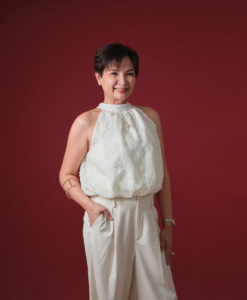
Her first job with an internet provider company was a hiccup, for Roselle Belleza-Andaya has always had a heart for retail marketing. From managing brands such as Sally Hansen and luxe essences at Rustan’s cosmetics section to Planet Sports and today, the lifestyle brand Mr DIY Philippines, she has clocked more than 24 years in merchandising, brand management, marketing and operations.
This serves her well in handling a fast-growing retail concept with already 994 stores and counting all across the Philippines, opening stores at the rate of 20+ a year. “We’re not a mum-and-pop shop. Our typical footprint would be around 550 sqm and our product line is wide,” Andaya says about Mr DIY that originated from Malaysia in 2005 but which she started in the Philippines in 2018.
“My career was evolving without any planning but according to my interests at a particular time. Cosmetics ‘cuz I was interested then in style; sports because I became athletic; and now, home.”
Andaya advices those just rising up the corporate ladder to “build a value driven culture of discipline and growth”. She adds, “Don’t think of profits alone but also of how you can support the community and conduct yourself responsibly.” Andaya also shares the advice she gives to her daughter: “Don’t sweat the small stuff. Stay committed to the goals because if you do, everything, even the small stuff, will be achieved.”
Carol Dominguez (President & CEO, John Clements Consultants Inc)
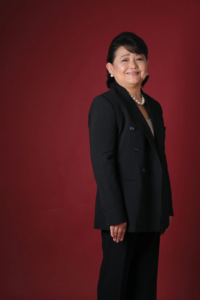
Mesmerised by Sheryl Sandberg, the first woman elected to Facebook’s board of directors, as she spoke about her Lean In Foundation to a group of Harvard Business School alumnae, Carol Dominguez was inspired to bring the concept to the Philippines. Sandberg’s non-profit, founded in 2013, aims to empower women to achieve their ambitions and create equal and inclusive workplaces.
Dominguez, a cum laude graduate of the University of the Philippines College of Business Administration, drew on her own experience. “We didn’t have too many opportunities then. I graduated cum laude but I could not get a job.”
But she also sought empirical proof by validating an early study that said the Philippines has many women leaders. “We proved the study correct, but there were issues,” Dominguez says. Reasons stopping Filipinas from becoming CEOs include a desire to achieve work-life balance, hesitancy to get ahead of their husbands, and a duty to care for the children.
So she co-founded Filipina CEO Circle with another force in the corporate world, Marife Zamora. FCC is now in its 10th year, with more than a hundred members.
Today, the playing field offers many opportunities, says Dominguez. However, this can be a cause for concern. “Unfortunately, they can’t decide on what they want.” Advising Filipinas dreaming of making it in the corporate world, she says: “You have to find out first what you want and have a passion to fight for it.”
Ambe Tierro (Country Managing Director, Accenture Philippines)
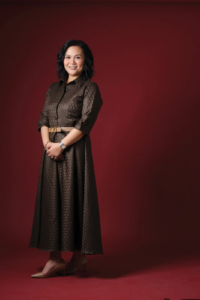
When she joined Accenture Philippines in 1990 as a programmer, Ambe Tierro, then a computer science graduate of De La Salle University, didn’t notice any corporate ladder to climb. “It happened when I was already there,” she remembers.
She planned to work with Accenture for only two years and then pursue her master’s. After a year, however, she was promoted and sent to the US office. “I realised I could gain more experience by continuing to work rather than leaving the workforce to study,” she says, now aware of the opportunity to move higher. Thirty-six years later, she is enjoying the view from the top as country managing director.
Tierro advises: “Join an organisation that invests in your learning and personal development, not just your skills. Continue to invest in and grow with the company.”
She adjusted when the first of her three boys arrived. “My eldest was a difficult pregnancy that required a long bed rest,” she recalls. “I went crazy just staying home!” As soon as her son was born, she returned to work, surer than ever that “one cannot be a happy mother without being a happy person first”.
At Accenture, Tierro sees a mission. “I am being tapped to contribute to skill-build, especially regarding AI, on a national level. I see my mission as stepping up Filipino talent to be more relevant globally in the tech industry.”
Cosette Canilao (President & CEO, Aboitiz InfraCapital)

Just over a year after joining Aboitiz InfraCapital as SVP and COO, Cosette Canilao became its president and CEO in 2020. While she eventually sees herself stepping back from corporate life, she intends to remain active in the business and infrastructure space through advisory work, board roles and teaching.
From her first job as an analyst at PDCP, a boutique investment company, the accounting graduate steadily built a career that traversed finance, advisory, government and infrastructure development. In between roles, she pursued a Master of Science in Finance at the University of the Philippines Diliman.
She also entered government service as executive director of the Philippines’ PPP Center during the Aquino administration, helping advance the country’s public-private partnership programme. Today, she leads the Aboitiz Group’s infrastructure business, with investments spanning airports, water and digital infrastructure. Its airport portfolio includes Mactan-Cebu International Airport, Bohol-Panglao International Airport, and Laguindingan Airport.
Canilao says her career would not have been possible without the support of her husband. Her son, a student of a deeply creative yet highly unforgiving field of performing arts, has also become an opportunity to impart lessons she believes apply equally to leadership and life. “I tell him to develop a healthy respect for rejection. There will always be moments when things do not go your way despite your efforts. What matters is learning how to absorb disappointment without losing confidence and continuing to move forward with discipline and perspective.”
Aleli Arcilla (Managing Director, Mondelēz International Philippines)
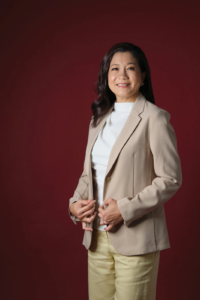
Early in her career, Aleli Arcilla was told by her CEO that she could never be head of sales because she was female. The words challenged the management economics graduate of the Ateneo, prompting her to pursue a senior leadership role at another company. She did, enough to impress her former boss, who asked her back. Arcilla accepted, and since then her career across several companies has consistently moved her forward and upward.
Her first job was in banking, a short stint because “finance was not my cup of tea”. She left the field and entered the field of FMCG (fast-moving consumer goods) multinationals, where she found a fit. When the offer from Mondelēz came, Arcilla was working in Singapore but was aching to go back home. “I wanted my impact to be in my country,” she says. She joined Mondelēz, where she holds the record as the first Filipina managing director in 15 years.
She also joined the Filipina CEO Circle, another fit, as Arcilla is passionate about mentoring the next generation of leaders and creating space for them at the top. “I want to help put a Filipino at the top spot of an FMCG multinational; we deserve that because we have the talent,” she declares.
Vanee Gosiengfiao (General Manager, Avon Philippines, China, Taiwan, Malaysia)

A year and a half into her role as general manager of Avon Philippines, China, Taiwan and Malaysia, Vanee Gosiengfiao is already gushing over the inspiring stories from her thousands of sales leaders and hundreds of thousands of representatives. “They taught me that sense of entrepreneurialism; many of them just became Avon ladies to help the family income.”
Gosiengfiao sees a similar path to women’s empowerment in the Filipina CEO Circle. “At FCC, where I am an outgoing board member, part of our advocacy is training the next generation. I like sharing the experiences of our Avon ladies.”
When her career started more than 20 years ago, Gosiengfiao recalls that there were few women in the boardroom. She was one of them. “I was blessed with very good mentors who encouraged me to go high in the corporate world,” she says, singling out GSK, where she worked for 15 years in consumer healthcare. “I spent 12 of those 15 years outside the Philippines, five years being in Philadelphia.”
“There are so much more opportunities for younger people today,” she continues, “especially for those who are adventurous and willing to learn.” As such, Gosiengfiao teaches the importance of grit and resilience.
Marriage was a non-negotiable. So, at 33 years old, she married her college sweetheart, with whom she has two children. “Family was never a choice, just a matter of timing.”
Cai Castillo-Reyes (President & CEO, Asticom Holding Co Inc)

To the younger generation entering the workforce, Mharicar “Cai” Castillo-Reyes, president and CEO of Asticom Technology Inc, advises: “Don’t stick to your comfort zone. Go out there and explore what you are passionate about. Then go for it!”
That sounds like the advice the psychology graduate and HR practitioner would have given herself a decade ago. In 2015, Reyes established Asticom, an outsourcing company aimed at addressing the talent challenges facing Ayala and Globe then. She saw this business gap during her tenure as Globe Telecom’s director of HR Shared Services.
She found the shift from HR to a business and general management role “exciting”. But she had to prepare herself. “I went through a lot of programmes myself. I am very lucky to have Ayala and Globe as my companies because they are both very nurturing, sending me to a lot of development programmes to ensure I was ready.”
While Asticom made her realise how much she enjoys being in the business world, she finds the new territory not entirely unfamiliar. “Asticom is still connected to talent and recruitment. We are an outsourcing company, with close to 4000 employees, providing opportunities for people.”
Reyes is also proud of having always worked with local companies. “I will continue to inspire women, empower them to develop themselves and elevate the Filipino talent. This is really my passion.”
Ginbee Go (EVP & Head of Consumer Banking, BPI)

As one of the five executive vice presidents at Bank of the Philippine Islands—a role just one step from the top—Maria Cristina “Ginbee” Go has built a career shaped by clarity of purpose, strength and grace. She does not seek titles for their own sake, but chooses work that is meaningful, disciplined and enduring in impact. For Go, recognition has always been about the trust earned and the value created. “Promotion is really the outcome of having made an impact,” she says. “Your competition is only yourself.”
Go regards her career as an evolving journey of learning, service and personal growth. This she shares generously with younger colleagues who seek her guidance. “This is part of your learning. When it’s your time, then everything will fall into place.” Grounded perspective and enduring openness to growth enable her to move through her career. “I don’t feel stuck because I keep looking for opportunities to learn.”
Beyond the boardroom, her partnership with her husband, a college sweetheart, is shaped by mutual encouragement and enduring respect as they pursued their individual aspirations.
Raising a son and a daughter, they have created a sense of home that is her steady source of grounding and fulfilment. “Being whole as a person is required for a strong and beautiful partnership.”
Beth Ventura (President, Anchor Land Holdings, Inc)

Believe it when Elizabeth “Beth” Ventura says she is “very disciplined”. In her career path, she first ensured financial independence before aiming for the top. “When I reached my financial goals through sales in real estate, I went back to school to take up marketing and real-estate development; also to La Salle for urban planning and real-estate management courses, including acquisitions, appraisals, feasibility studies; and immersed myself in financials and construction to know the entire industry so I won’t be fooled.”
She attributes this discipline to being the youngest in a family of two girls and one boy, always being asked to do tasks.
As president and shareholder of Anchor Land, Ventura is directly engaged in its future. She presents a newly launched advocacy for sound decision-making in the field of investments. “Right now, we have a lot of challenges in development and in finding ways for our clients to really grow wealth,” Ventura shares, adding that this new venture involves destination residence.
Farther into the future, she dreams of a school for real-estate and of teaching there. She would also like to empower women in her beloved industry. “Where investment in real estate is concerned, I would like to empower more women to take on bigger roles, not just being brokers,” she says.
Janice Gruenberg (ASEAN Head for Client Retention, Capital Markets, FIS)

Having graduated with a computer science degree from the Ateneo in 1992, Janice Gruenberg thought her only career option was programming. Her first job, as a firmware design engineer, confirmed that while she liked the computer world, she would be happier in a less technical position. Gruenberg must have been born under a lucky star, because her wish was immediately granted. “The tide kept taking me somewhere, but always forward and upward,” she says. “Everything came naturally. In fact, it’s been a while since I wrote a resume.”
Her first company set up a sales and marketing arm and asked Gruenberg to head it. “That’s when I started loving my job,” she says. “I was still in the same world, but I was in something less technical, in management.”
Her 35-year career, which has now settled her as the Asean Head for Client Retention at Fidelity National Information Systems, an IT company servicing the financial services industry, has given Gruenberg valuable lessons to impart to younger people just entering the workforce, including her daughter in her twenties.
“Always be present and authentic. Today, you can work from home or finish your task online, but to rise up, you have to be visible. The human factor is very important in all your dealings.
“Aside from work, mind other things like health, wellness, fitness, and extracurricular activities. Be a well-rounded person, not just focused on your job.”
Gruenberg is also an aerial silks athlete who won the POSA aerial sport championship in 2025 in Hungary. She is also the founder of Coach A Cup, an international aerial sport competition.
This article first appeared on Tatler Asia.