Gender Fair Education

With the recent opening of schools, I was reminded of a significant milestone that took place in September 2015, when 193 countries of the United Nations (UN) General Assembly, including the Philippines, committed to achieving the Sustainable Development Goals (SDGs) by 2030. Among the 17 Global Goals are SDG 4: Quality Education and SDG 5: Gender Equality.

It has been eight years since the SDGs were adopted. The question to ask is are we even there yet?

With reference to the UN’s “The Sustainable Development Goals Report: 2023 Special Edition” which presented a candid assessment of the global progress on SDGs, an estimated 84 million children and young people will still be out of school by 2030 and it will take 140 years for women to be represented in leadership positions. UN cited the COVID-19 pandemic and the war in Ukraine as the major causes that reversed the decades of progress we have so far achieved. Given this, the world is falling far behind in achieving quality education and is not on track to achieve gender equality by 2030.

GENDER BIAS IN FAMILIES
The family, as a primary agent of socialization, is the foundation of values, behaviors, and social development. As a matter of fact, in Filipino culture, the family ranks in the top list of our life priorities. Inadvertently, gender and social norms, such as women being the default caregivers and men as the main financial providers of the family, are being perpetuated at home.

Oxfam’s report entitled “Understanding Norms Around the Gendered Division of Labour” reveals that the concepts of obligation or responsibility and the idea that each household member fulfills a prescribed role contributes to family harmony and unity. As traditional values still dominate our society, families inevitably conform to these expectations and socially accepted norms based on gender to avoid conflicts.

Furthermore, the language and social cues used within families perpetuate gender bias. In the same report, women who did not fulfill care responsibilities were generally perceived in a negative manner, often described as “lazy,” “negligent,” and “untrustworthy.” Therefore, as the report noted, the notion of women not being involved in care responsibilities is unacceptable. In addition, the Women in the Philippine C-Suite Study of the Philippine Business Coalition for Women Empowerment (PBCWE) and the Makati Business Club (MBC) found that, “timing is apparently crucial for women, especially when we recognize that aside from work, they also need to anticipate, plan, and prepare for their child-bearing and child-rearing years or when prioritizing having a family.” Overall, the mindsets and perceptions that children learn at home are carried over in school, and eventually when they pursue their chosen professional careers.

FORMAL EDUCATION
Schools are extensions of a child’s “home,” and therefore, play an important role in eliminating gendered expectations by fostering safe and inclusive learning environments. Materials, such as textbooks and visual aids, are fundamental to learning (and unlearning) gender stereotypes. One of the prevailing examples of stereotypes is the belief that boys are “naturally” gifted in learning technical skills in math and science, while girls are good at livelihood education and literature. This example only further exacerbates the notion that gender is a major determinant of what professions children should pursue, which should not be the case.

Notwithstanding that gender bias still exists, we are seeing gradual changes albeit at a slow pace. Using data from the Philippine Statistics Authority (PSA), the Department of Science and Technology — Science Education Institute (DoST-SEI) reported that there was a 148% increase, from 179,000 in 1990 to 445,000 in 2015, in Filipino women pursuing careers related to Science, Technology, Engineering, and Mathematics (STEM). Females occupy nearly half of the country’s total science and technology workforce, prominently in the health industry, while women in engineering, architecture, and ICT-related fields remain to be under-represented. The under-representation can be attributed to the long-standing metaphor called the “leaky pipeline,” which refers to the decrease in number of female employees as they progress in their careers due to many factors, such as discrimination, lack of role models, gender pay gap, and the outdated idea of job segregation. Insights from the recent Women in Engineering Baseline Study, spearheaded by the Council of Engineering Consultants of the Philippines-Young Professionals Forum (CECOPHIL-YPF), further uncover that while it is believed that opportunities for men are similarly offered to women, factors that are unique to women must be considered — one of the main reasons why there is a need to conduct gender sensitivity trainings in the workplace.

SOLVING PROBLEMS TOGETHER
Education starts at home and therefore, unlearning gender biases must start within families. When people are limited to conforming to obsolete beliefs, it hurts everyone. In a similar manner, academic institutions must hold gender sensitivity training among teachers and learners. In addition, an extensive review of the current curricula must be initiated to ensure that gender bias and harmful norms are removed from learning materials, and one is free to pursue a professional career, regardless of gender. Without a doubt, rendering a more gender-fair environment at home is conducive to achieving success in school and in the workplace.

The likelihood of achieving the global targets outlined in the SDGs is unlikely, but we are not saying that it is impossible. You may ask, what can we do immediately? I believe now is the right time to reverse mindsets and stand up for gender equality at home and in school. Let us start accepting the norm that men should have an active role in doing care work, and that it is normal for women to provide for the family. As they say, if not now, when?

I would like to end by sharing an African proverb, “If you educate a man, you educate an individual. But if you educate a woman, you educate a nation. When girls are educated, countries become stronger and more prosperous.”

(This article reflects the personal opinion of the author and does not reflect the official stand of the Management Association of the Philippines (MAP).)

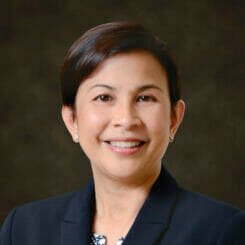
Ma. Aurora “Boots” D. Geotina-Garcia is a member of the MAP Committee on Diversity, Equity and Inclusion. She is the founding chair and president of PHILWEN. She is also chair of the Governing Council of the PBCWE and president of Mageo Consulting, Inc., a corporate finance advisory services firm.

map@map.org.ph

magg@mageo.net

Hot Flat World

If you have read Thomas Friedman who started with a flat world (The World is Flat, 2005) then followed it up with the sequel on how we should green the world (Hot, Flat and Crowded, 2008), that was a good 15 years ago. And today, listening to Lopez Group chairman Federico “Piki” Lopez speak, we are in big trouble. Our world is hotter and only a conscious effort to rebuild, renew and regenerate our planet will save it from burning out.

We had Mr. Lopez at the annual membership meeting of the Nextgen Organization of Women Corporate Directors (NOWCD) and he talked about REGENERATION. “Sustainability alone is not enough,” he shared. The power of billions of people to bring this world to hotness can be the same power to regenerate it. The solution really sounds simple, if we all make the effort.

Who wants to live with floods and heat waves, forest fires and tsunamis? We definitely do not want to. And the way to do it is really to avoid the use of coal and start going electric. But electricity must also be from greener sources like solar, wind and hydropower if we are to enjoy its benefits. And first and foremost is to make businesses think about how to be green and still be profitable.

We are now in a good place to convert to renewable sources of energy. There is an array of electric vehicles and hybrid cars available, albeit still with a steep price. There also is the seemingly disposable electric tricycle, because its battery replacement cost is almost the same as the cost of a complete brand new unit.

As early as 15 years ago, we had a campaign called “Live Green” and we gave talks on the use of CFLs (now LEDs) instead of fluorescent lamps, the use of power strips which you could turn off rather than have all your appliances on the “wait” mode, consuming power even when not in use. We also started adopting the use of inverter appliances like air conditioners. Today, technology has inverter models of washing machines, power drills and other equipment. There is no reason not to change over to inverter and power-saving versions of household staples like air conditioners.

Today, making green choices is easier than ever. There are solar lamps and chargers for household lights, security lamps and solar versions of almost every appliance. Thanks to the lowering of prices of photovoltaic (PV) cells, we also now have a lot of solar farms, gathering electricity at lower costs than coal. These solar farms sell back the power to the grid, adding to our reduced dependence on fossil fuels as a country.

The other activity we all must do is to reforest, replant and regenerate our farms. Did you know that there is a law requiring every able-bodied Filipino 12 years and older to plant one tree a year? I had the most interesting conversation with a learned public servant who is a forester and a CENRO or Community Environment and Natural Resources Office head. He told me more about free seedlings the Department of Environment and Natural Resources (DENR) is giving away. I was able to get a Narra seedling from the event I attended in Laguna. Apparently, DENR distributes these for free as they are replacement of trees coming from areas with tree cutting permits. For every tree cut, 50 seedlings replace the cut tree. For naturally growing trees, the replacement is 100 seedlings. All one has to do is to visit a DENR office and ask for a seedling.

Besides these free seedlings, we at the Coffee Board (www.philcoffeeboard.com) also have a program with GCash to plant coffee trees all over the country. So I asked my new consultant if they could help us source shade trees. Coffee seedlings need shade in their early stage. In Benguet they use native alnos or pine, and in Cavite they use madre de cacao.

It is really enriching to talk to foresters who mean well and who further added that he is recruiting young graduates who can continue work he has started to reforest our lands. Now that’s a good example of someone thinking of the next generation already, even before his retirement. His team was just as interested in the dispersal of seedlings and showed their love for their work…on a Saturday, too. It is rare to have government people work on weekends, but this group was in their uniforms, ready to help consumers like myself by answering many queries I had.

For example, why do we distribute mahogany seedlings when we know that its leaves are acidic to the soil and that they are not indigenous to our forests? They cleverly answered that distribution of mahogany is allowed IF it is for production and not for reforestation. Clearly, they do not recommend mahogany to be planted just anywhere but purely for production purposes (imagine a manufacturing plant for wood) as it is harmful to animals and for biodiversity in general. Now, that is an intelligent clarification I truly appreciated.

So for your community, family or company, you can partner with an organization like GCash and Coffee Board to plant your tree, anywhere in the country. You may also volunteer to dig holes, spend a day in the warm sun and get your Vitamin D. We will work with the CENRO, PENRO (Provincial Environment and Resource Office), the farmers’ groups to get your trees planted and maintained. With today’s available technology like drones, GPS and satellites or similar monitoring equipment, we can see these trees through their infancy to adulthood.

As Mr. Lopez shared, we have to now regenerate and reforest. Planting a tree (the correct species) is the simplest, best thing anyone can do. Imagine 100 million trees a year. Now that can make our country cool in no time. And reap other benefits of regeneration. A cooler world for all.

First appeared on Philstar by Chit U. Juan

Directors’ Duties on Climate Change

By: Atty. Euney Marie Mata-Perez on September 14,2023

I was just inducted as a member of NOWCD, the NextGen Organization of Women Corporate Directors,  the Philippine chapter of Women Corporate Directors International.

Incorporated on September 24, 2021, NOWCD seeks to bring together a trusted community of experienced and engaged directors across the Philippines, looking to continue to increase representation of women across publicly- and privately- held boards, from 17% to 23% by 2025. The organization is driven by the belief that diversity and representation is central to ensuring success for any organization.

At the induction, Mr. Federico “Piki” Lopez, the Chairman and Chief Executive Officer of First Philippine Holdings Corp (FHPC), as the speaker, shared his very interesting and relevant thoughts about climate change, under the FPHC’s mission to “foster collaborative pathways for a decarbonized and regenerative future”.

His talk spurred interest and awareness to the NOWCD members on the obligations of directors with respect to climate change.  This led me to review the legal opinion entitled “Directors’ Duties & Responsibilities and Disclosure Obligations Under Philippine Law On Climate Change Risks” (the “Opinion”), which was published by the Commonwealth Climate and Law Initiative (CCLI), together with ClientEarth and the Institute of Corporate Directors. The Opinion was authored principally by my esteemed law school professor, Atty. Cesar Villanueva.

It is hoped that the Opinion will lay the basis for our regulators to formally adopt rules which outline directors’ duties with respect to climate change.  This article will briefly summarize the contents of the Opinion in light of directors’ legal and fiduciary duties.

  1. The Philippines’ 1987 Constitution recognizes the citizens’ “right to health” and “right to a balanced and healthful ecology”. The Supreme Court has affirmed this right in the case of Oposa v. Factoran, G.R. No. 101083, 20 July 1993.
  2. The Constitution, while guaranteeing the principles of private ownership, also decrees the “social function of private property and economic enterprises”, and, in this regard, provides that “the use of property bears a social function and economic agents (which include corporations) should contribute to the common good”.
  3. The foregoing means that the fiduciary duties of directors of “for-profit” corporations of obedience and diligence, not just to the shareholders but to other stakeholders, as well their duty to abide by the rules of good governance, “include within the scope of responsibility a stewardship role to ensure that company operations do not degrade the environment or contravene environmental laws”. 
  4. It recognized that the Climate Change Act (Republic Act No. 9729), while providing opportunities where private sector may have the opportunity to fulfill their social responsibilities towards meeting climate risks, does not define or impose an institutional responsibility on the private corporate sector to address climate change beyond the legal parameters set out in our environmental laws.
  5. However, under Section 30 of the Revised Corporation Code (RCC),  directors can be personally and solidarily liable with the corporation for “willfully and knowingly assenting to patently unlawful acts of the corporation” or at least for “gross negligence or bad faith in directing the affairs of the corporation”.   In this regard, the Opinion states that, while prohibited acts under various environmental laws provide limited areas where directors may be held criminally liable, Section 30 of the RCC can provide legal basis for such a liability especially “when the commission of such prohibited acts is egregious”.
  6. Directors also have the duty to ensure that material climate change issues should be properly disclosed.  The RCC includes certain duties of directors to “inform or disclose” to shareholders material or relevant information relating to corporate transactions.
    1. Under the Securities and Exchange Commission’s Code of Corporate Governance, publicly-held companies are mandated to ensure that material and reportable non-financial and sustainable issues are disclosed.
    2. The Philippine Stock Exchange disclosure rules require publicly-listed companies to disclose any material fact which may materially affect investor’s decisions, which would include disclosure on climate-related risks.

If shareholders are able to prove that a director’s failure to identify and monitor climate change risks constitute a breach of their fiduciary duties, a derivative suit may be filed against erring directors.

  • The Opinion did state that under the current disclosure rules for publicly-listed companies which adopt the “complain or explain” approach, the obligation to disclose and submit the sustainability report, including material climate-change disclosures, is primarily a corporate responsibility.  Thus, directors are not directly and personally liable for corporate disclosures, unless they make false or misleading statements of material fact in required SEC filings which are tantamount to “market manipulation” or “fraudulent transactions”, under the Securities Regulations Code.

In summary, the emerging role of directors in addressing climate change includes, not just the duty to refrain from harming the environment based on the “prohibited” acts which may be imposed under existing laws, but also includes the directors’ stewardship over the company’s long term success with due regard to climate change risks.

Euney Marie J. Mata-Perez is a CPA-Lawyer and the Managing Partner of Mata-Perez, Tamayo & Francisco (MTF Counsel).