Businesses are exploring the next competitive advantage beyond digital transformation.
Global research and
advisory firm Gartner Vice President and Fellow David Furlonger, who recently visited Manila in May, offered a
strategic look at how enterprises are evolving by becoming autonomous businesses, where machines act independently
to create and exchange value.
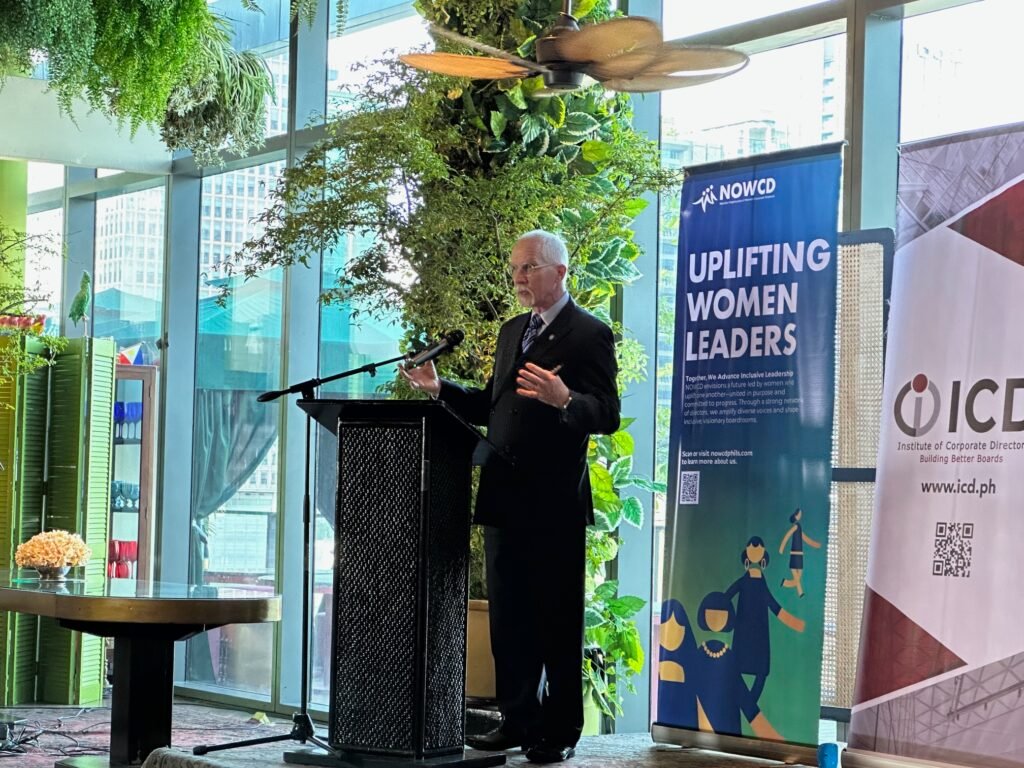
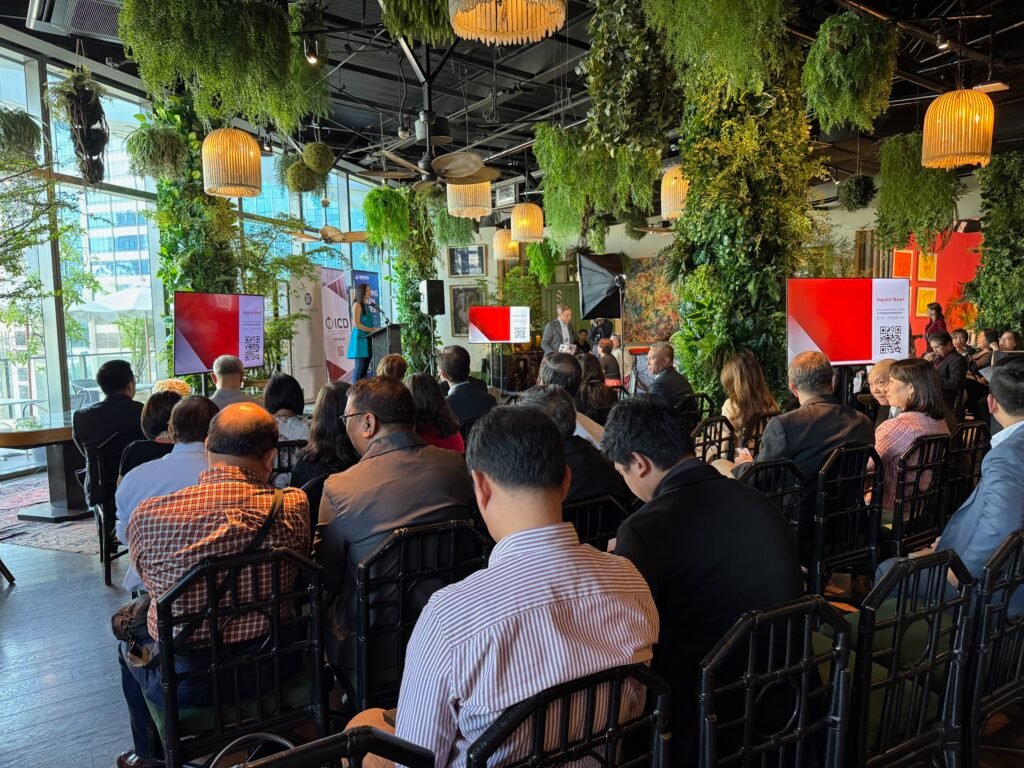
Gartner conducted sessions with SM Investments Corporation, the parent firm of the SM group, and the Institute
of Corporate Directors (ICD) in partnership with the Nextgen Organization of Women Corporate Directors (NOWCD).
Gartner noted a shift in the mindset of leaders who are no longer simply optimizing, but seeking ways to
continuously evolve.
Some of the insights from these sessions are:
Disruptions you might not see
coming in 2024 to 2029
Mr. Furlonger identified disruptions businesses are contending with today. These are
Personalized Cinematic Experiences, Search Engine Optimization, Guardian Agents, Autonomous Drones, Software Defined
Semiconductors, Gen AI Avatars, Energy Power Play and Water Scarcity.
He said there is a significant shift
over the last 25 years where combinations of disruptions are joining together to make the complexity of the
disruption much greater and their impacts and outcomes much harder to deal with.
AI as the Central
Catalyst
Gartner further said that artificial Intelligence has emerged as the most disruptive force over the next
three years, cited by 77% of CEOs far outpacing other emerging technologies. Yet only 29% believe their businesses
are structurally prepared for an AI-first world. This signals a major transformation gap.

AI is not just another tool in the tech stack, it is shaping how businesses make decisions, operate, and
engage with both human and machine customers. But its real value depends on whether the organization can change its
operating model to match the pace and capabilities AI enables.
Building Dynamic Capacity
Mr. Furlonger
introduced the concept of dynamic capacity, the ability for organizations to flex, scale, and pivot in response to
change. This includes increasing or decreasing production, rebalancing workforces, reengineering supply chains, and
acquiring or divesting assets all in real time.
This means designing businesses where human and machine
collaboration is foundational, allowing companies to thrive in unpredictable markets.
From Digital to
Autonomous Business
He also highlighted a clear evolution of business maturity: from analog to e-business, to
digital, and now toward autonomous business. This new model is defined by systems that can learn, act, adapt, and
even transact independently.
Autonomous businesses will rely on four integrated pillars: autonomous operations, self-adjusting products,
augmented leadership, and the emergence of machine customers. Together, these elements form a programmable economy
where decisions are decentralized and made by intelligent agents.
Challenge: What’s the Real Change?
Mr.
Furlonger posed a critical question: AI is the tool—what’s the business change? He said that technology adoption
alone is insufficient. What’s required is a reinvention of business itself that includes its structures, processes,
and mindset. Organizations that stop at digital transformation will soon be overtaken. The next frontier demands
intentional design for autonomy, adaptability, and AI-native.